Proposed changes to SIA licence-linked qualifications reflect the increasingly complex role of frontline security personnel.
The Security Industry Authority has launched a major consultation on proposed changes to the qualifications and prerequisites required for security licensing.
The proposals include stronger first-aid requirements, independent assessment of English-language ability and updated training covering Martyn’s Law, spiking, drug-related incidents, disability awareness, drones, social-media “auditors” and crime-scene preservation.
The consultation closes on 23 October 2026, with new qualifications expected to launch during 2027.
At Radius Security, we believe the review reflects an important reality: modern security work requires far more than simply observing a building or controlling an entrance.
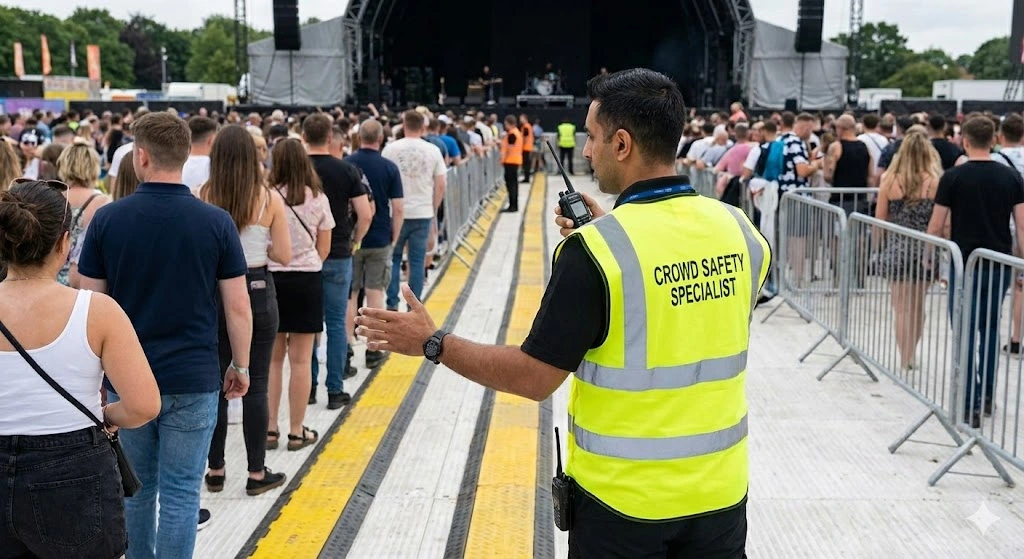
Security is a public-facing profession
Officers regularly encounter medical emergencies, vulnerable people, aggression, suspected criminal activity and situations requiring immediate decisions.
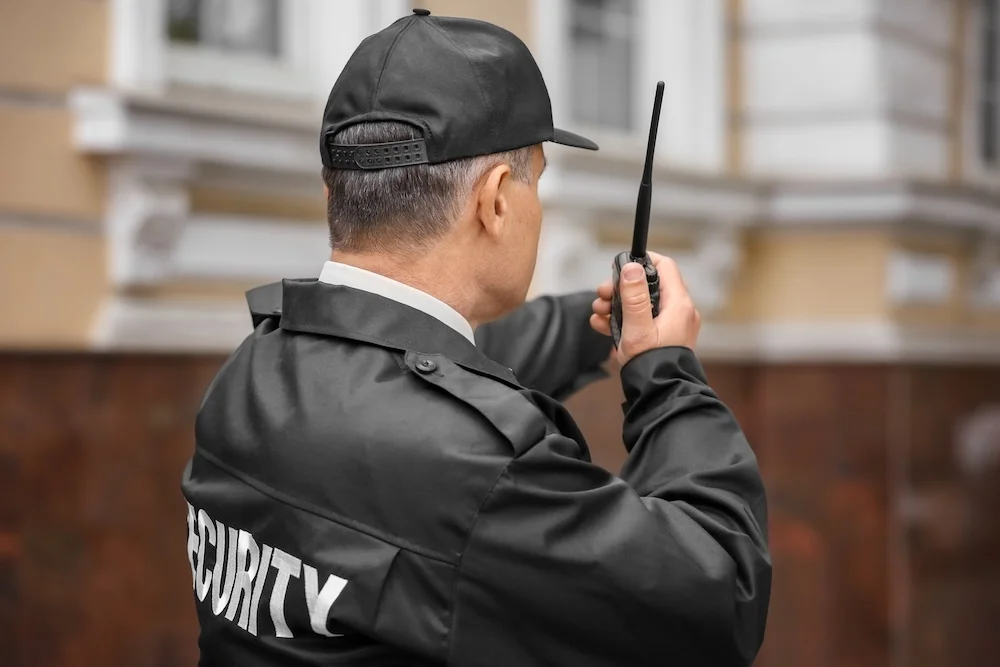
They must be able to communicate clearly with customers, colleagues, control rooms, police officers and other emergency responders. They may also be required to write an accurate incident report that later becomes evidence.
The SIA’s research found that 91% of the licence holders surveyed considered first-aid skills important, while more than half had used those skills at work. It also found that 43% were encountering increasing levels of workplace violence.
These findings demonstrate why training must reflect the incidents officers actually face.
New risks require new knowledge
The security environment is continuously changing.
Officers increasingly encounter people filming premises, testing boundaries or claiming to conduct social-media audits. Drones can create safety, privacy and security concerns. Spiking awareness is relevant beyond licensed venues, while Martyn’s Law will place greater emphasis on public-protection procedures.
Training must help officers distinguish between behaviour that is unusual and behaviour that is unlawful. Responses should remain calm, proportionate and consistent with the individual’s legal authority.
Communication is safety-critical
Effective communication is fundamental to de-escalation, emergency response and accurate reporting.
An officer must understand instructions, explain decisions, recognise when someone requires help and pass information without ambiguity. This is particularly important during evacuations, medical incidents and confrontations.
Any assessment of language ability must be fair and consistent, but the operational requirement for clear communication cannot be ignored.
A licence is the starting point
An SIA licence provides an essential baseline, but it should never represent the end of an officer’s development.
Site-specific training, assignment instructions, counter-terrorism awareness, refresher training, supervision and performance monitoring are all necessary to turn initial qualifications into operational competence.
Clients should also look beyond whether an officer simply holds a licence. They should ask how personnel are vetted, briefed, supported and assessed after deployment.
Radius Security supports proportionate improvements that strengthen public confidence and give frontline personnel the knowledge they need to work safely.
Professional standards must evolve with the role, because the public increasingly depends on security officers to do much more than stand and observe. Talk to Radius Security about trained, SIA-licensed officers for your site.