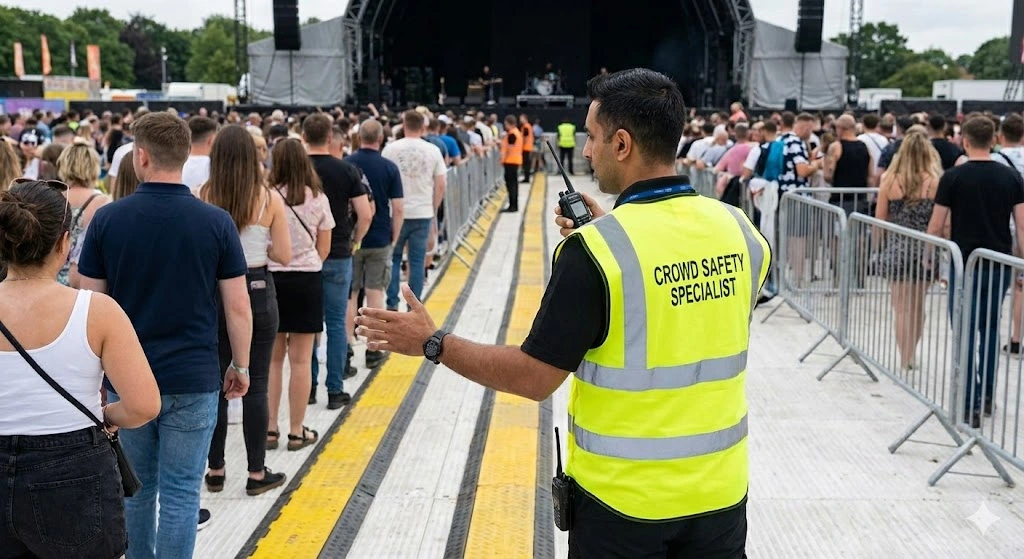

With Martyn’s Law expected to come into force from spring 2027, venues and event organisers should begin turning legal requirements into practical public-safety procedures.
The Terrorism (Protection of Premises) Act 2025, widely known as Martyn’s Law, represents a significant change in how publicly accessible premises and events prepare for terrorism.
The Security Industry Authority, which will regulate the legislation, has completed its consultation on how it intends to support compliance, conduct inspections and respond to non-compliance. The SIA expects the legislation to come into force from spring 2027 and is encouraging organisations within scope to prepare now.
For Radius Security, the central message is simple: compliance should not begin with paperwork. It should begin with people, procedures and an honest examination of how an organisation would respond if the unthinkable happened.
What will organisations need to consider?
The legislation creates different requirements according to the number of people reasonably expected to be present.
Premises expecting 200 or more people will fall within the standard tier. Larger premises and qualifying events expecting 800 or more people will be subject to enhanced requirements.
Depending on the tier, organisations may need to consider:
- Evacuation, invacuation and lockdown procedures
- Communication with staff and members of the public
- Access and egress arrangements
- Identification and escalation of suspicious activity
- Command and decision-making responsibilities
- Coordination with security teams and emergency services
- Staff training, exercises and recorded evidence
- Reasonable measures to reduce vulnerability and harm
These arrangements must reflect the actual premises. A generic document stored in an office will offer little protection during a fast-moving emergency.
Security personnel have a central role
Security officers and door supervisors are often the first people to identify unusual behaviour, unattended items, hostile reconnaissance or a developing incident.
They may also be responsible for controlling entrances, securing internal areas, directing the public and passing accurate information to the emergency services.
This makes effective briefing essential. Officers must understand the site, its emergency procedures and the limits of their authority. They must also be able to communicate confidently under pressure.
Preparation should involve the entire organisation
Martyn’s Law is not solely a security-department responsibility.
Senior management, venue operations, facilities teams, event organisers, contractors and frontline staff all have a part to play. Plans should also consider disabled people, vulnerable visitors and anyone who may require additional assistance during an emergency.
Testing arrangements through exercises can expose gaps that are easily missed on paper, including unclear instructions, unsuitable assembly points, communication failures and conflicting responsibilities.
Protecting what matters
Radius Security welcomes the principle that publicly accessible premises should be better prepared for terrorist incidents.
The greatest value of Martyn’s Law will not come from enforcement action. It will come from organisations developing workable procedures, training their people and creating a stronger culture of vigilance.
Spring 2027 may appear some distance away, but meaningful preparation takes time.
The right time to begin is now. Speak to Radius Security about preparing your venue for Martyn’s Law.