
Security services are not one-size-fits-all. Different premises, different risk profiles, and different business types require different approaches — and one of the most common points of confusion is the difference between static guarding and other forms of professional security.
This guide explains exactly what static guarding is, how it differs from manned guarding and mobile patrols, which businesses benefit from it, and what to look for in a static guarding provider.
What Is Static Guarding?
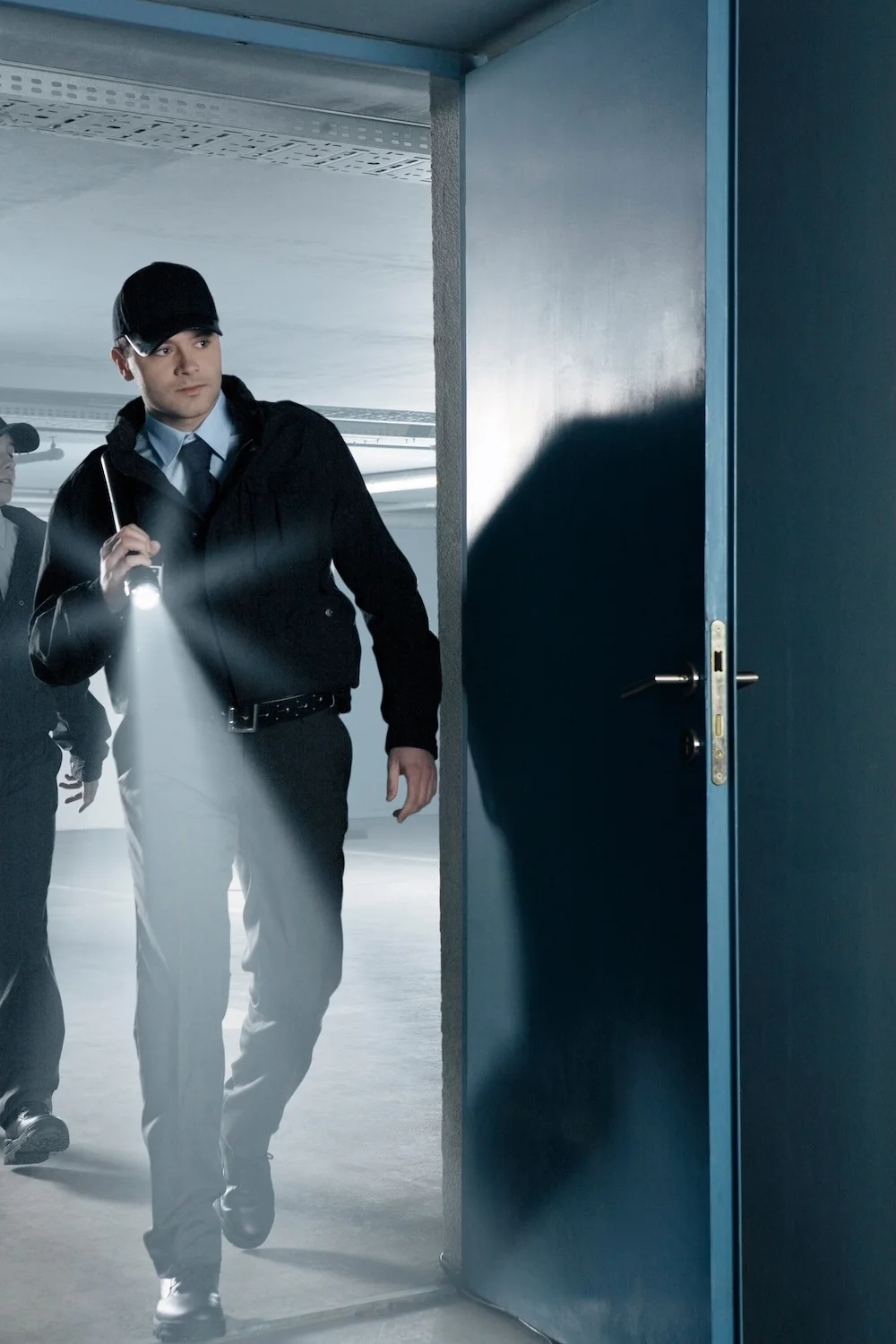
Static guarding is a security service in which a trained, SIA-licensed officer is positioned at a fixed post for the duration of their shift. Unlike a mobile patrol officer who visits multiple premises, a static guard remains at a single site — providing a continuous presence, managing access, monitoring the environment, and responding to any incidents that arise.
The term ‘static’ refers to the officer’s deployment, not their activity. A static guard is not passive — they are actively controlling access, observing the site, conducting internal patrols within the premises, and maintaining security awareness throughout their shift.
What Does a Static Security Guard Do on Shift?
The specific responsibilities of a static guard depend on the site and the client brief, but a typical shift includes:
- Access control. Checking the identity and authorisation of everyone entering the site — staff, visitors, contractors, and delivery drivers. Maintaining an accurate access log.
- Perimeter and premises checks. Conducting regular internal walks of the building, checking fire exits, plant rooms, stairwells, and other areas where incidents or hazards could develop unnoticed.
- CCTV monitoring. In many deployments, the static guard monitors CCTV feeds from a fixed control point and acts immediately on anything identified on camera.
- Visitor and contractor management. Receiving visitors, logging arrivals and departures, issuing passes, and ensuring contractors are accompanied or cleared before accessing restricted areas.
- Incident response. Acting as the first responder if a theft, intrusion, fire, medical emergency, or security breach occurs during their shift — and managing the initial response until specialist services arrive.
- Written reporting. Maintaining a contemporaneous log of activity, incidents, and access events throughout the shift. At the end of the shift, a written report is handed over to management or the relief officer.
Static Guarding vs Manned Guarding: What Is the Difference?
In practice, ‘static guarding’ and ‘manned guarding’ are often used interchangeably — and in many contexts they mean the same thing: a uniformed, licensed officer positioned at a fixed site.
When a distinction is drawn, it is typically this:
Manned guarding is the broader category — it refers to any deployment of security officers at a premises, including those who move around the site or perform active patrols within it.
Static guarding is a specific subset of manned guarding, emphasising that the officer remains at a defined post — such as a gatehouse, reception desk, or entrance point — rather than roving around the wider area.
For most purposes, the practical difference is minor. What matters is that the officer is licensed, properly briefed on your site, and deployed in a way that addresses your specific security requirements.
Static Guarding vs Mobile Patrols: Which Do You Need?
This is the more meaningful distinction for most business owners:
Static guarding is appropriate when your site requires a consistent, continuous human presence — a fixed point of control that does not leave. It is the highest level of on-site security and is suited to high-value assets, complex access requirements, or sites where incidents are a regular occurrence.
Mobile patrols are appropriate when you need documented security visits at regular intervals but do not require a full-time presence. A patrol officer visits your site multiple times per shift, checks access points and perimeters, and moves on to the next site on their route. The cost is significantly lower, and for many premises, the deterrence value is comparable.
A useful rule of thumb: if your site needs someone there every minute it is occupied or unoccupied, static guarding is the answer. If regular, documented checks provide sufficient coverage, mobile patrols may be more appropriate.
Many clients combine both — static guarding during trading hours, mobile patrols for overnight coverage — creating a cost-efficient layered approach.
Which Businesses Use Static Guarding?
Static guarding is most commonly deployed at:
- Construction sites. High-value plant, materials, and equipment make construction sites a major target for theft. A static guard on site overnight and at weekends provides deterrence and an immediate response to intrusion — particularly important for city-centre construction projects where unattended sites are easily accessed.
- Retail premises and shopping centres. Shoplifting, organised retail crime, and after-hours break-ins are consistent risks for retail. A uniformed presence at key points deters opportunistic theft and provides a rapid first response.
- Gated industrial estates and warehouses. Distribution centres, logistics hubs, and warehouses holding high-value goods require controlled access and continuous monitoring. Static guarding at gatehouse positions manages vehicle and pedestrian access throughout the operational day.
- Hospitals, care facilities, and education campuses. Sites with vulnerable occupants or complex access requirements — multiple entrances, out-of-hours activity, contractor movement — benefit from a static presence to manage access and respond quickly to incidents.
- Events and temporary premises. A short-term event, pop-up venue, or temporary site requires the same quality of security as a permanent one. Static guards can be deployed for a single shift or a short-run event without a long-term contract.
What to Look for in a Static Guarding Provider
When choosing a static guarding company for your Manchester or North West premises:
- Confirm SIA licensing. Every officer must hold a current, valid SIA Security Guarding licence. This is not optional — it is the law. Any provider that hedges on this point should be dismissed immediately.
- Ask about ACS accreditation. The SIA Approved Contractor Scheme indicates that the company has been independently assessed for management quality, training standards, and operational practices. Radius Security holds ACS status for Manned Guarding.
- Understand the briefing process. A professional provider briefs their officers on your site before deployment — your premises, your specific risks, your reporting requirements, and your escalation procedures. Ask how this is done.
- Request sample shift reports. You should receive a written record of every shift. Ask to see a sample report before you commit. It tells you more about the quality of the service than any sales conversation will.
- Ask about relief cover. What happens if your regular officer is sick? A professional provider has a clear process for sourcing like-for-like cover without leaving your site unprotected.
Static Guarding Across Greater Manchester and the North West
Radius Security provides static guarding for construction sites, retail premises, industrial estates, managed properties, and commercial buildings across Greater Manchester, Wigan, Warrington, Bolton, and the wider North West. All officers hold current SIA licences and are briefed specifically on each site before deployment.
Static security involves an officer positioned at a fixed post at your premises for the duration of their shift, providing a continuous on-site presence. Mobile security involves officers travelling patrol routes and visiting multiple premises at agreed intervals — providing documented checks without a full-time presence. Static is appropriate when continuous coverage is needed; mobile patrols work well for sites requiring regular, cost-effective out-of-hours checks.
Static guarding costs in the UK typically range from around £15 to £25 per hour per officer, depending on location, shift pattern, the experience of the officer required, and whether specialist qualifications are needed. Radius Security provides free, tailored quotes based on your specific requirements — contact us to discuss your site and we will outline the most appropriate and cost-effective solution.
In the UK, any officer carrying out licensable security activities — including access control and premises security — must hold a valid SIA Security Guarding licence. This requires completing a specified Level 2 training course and passing a criminal record check. Some deployments may also require a First Aid certificate, CCTV operator licence, or specialist site-specific qualifications. Radius Security confirms all officers’ licensing before deployment.
Static guarding and CCTV serve different functions — and the best security setups use both together. CCTV records and can be monitored remotely, but it does not physically intervene. A static guard can respond immediately to an incident, manage access in real time, and exercise judgement in situations a camera cannot. Many of our clients combine CCTV with a static officer who monitors the feeds on-site, giving them both coverage and response capability.