Manchester’s summer events calendar is one of the most diverse in the UK. From outdoor festivals at Heaton Park to street food markets in the Northern Quarter, from stadium concerts to corporate summer parties — the city hosts thousands of events every season.
For event organisers, security is not optional. It is a legal requirement, a licensing condition, and — most importantly — a fundamental duty of care to everyone attending. This guide covers what Manchester event organisers need to know about security: Martyn’s Law compliance, the difference between door supervision and crowd safety management, and what to ask a potential provider before you sign.
What Security Does a Manchester Event Organiser Actually Need?
The security requirements for your event depend primarily on the scale and nature of the event, the venue type, and whether alcohol is served.
For most events on a licensed premises, you will need SIA-licensed door supervisors. The number required is typically determined through a licensing risk assessment, but as a practical guide:
- Small events (up to 100 guests): usually 1-2 door supervisors, depending on venue layout and risk profile
- Medium events (100-500 guests): typically 3-6 door supervisors plus a supervisory officer on site
- Large events (500+ guests): a full crowd safety management plan is usually required, involving multiple roles including crowd safety stewards, search personnel, and a safety officer
For events that are not on licensed premises but involve large crowds — outdoor festivals, public gatherings, sports events — the requirements differ. Crowd safety management takes precedence over door supervision in these contexts, and your event safety plan must reflect this.
Martyn’s Law and Your Event
If you are organising any public event in Manchester, you need to be aware of Martyn’s Law — formally known as the Protect Duty.
Martyn’s Law requires venues and events above defined thresholds to have documented security plans in place, to conduct threat assessments, and to ensure staff are trained in protective security procedures. It was introduced in the wake of the Manchester Arena attack in 2017 and represents one of the most significant pieces of venue security legislation in a generation.
In practical terms, this means event organisers cannot treat security as an afterthought. You need a documented plan, trained personnel, and evidence that you have assessed the specific threats relevant to your event and venue.
Working with an ACS-approved security company is one of the most straightforward ways to demonstrate that you are taking your obligations seriously. Radius Security’s teams are experienced in Martyn’s Law planning for events and venues across Greater Manchester.
Door Supervision vs Crowd Safety Management: Which Do You Need?
This is one of the most common questions event organisers ask, and the distinction matters:
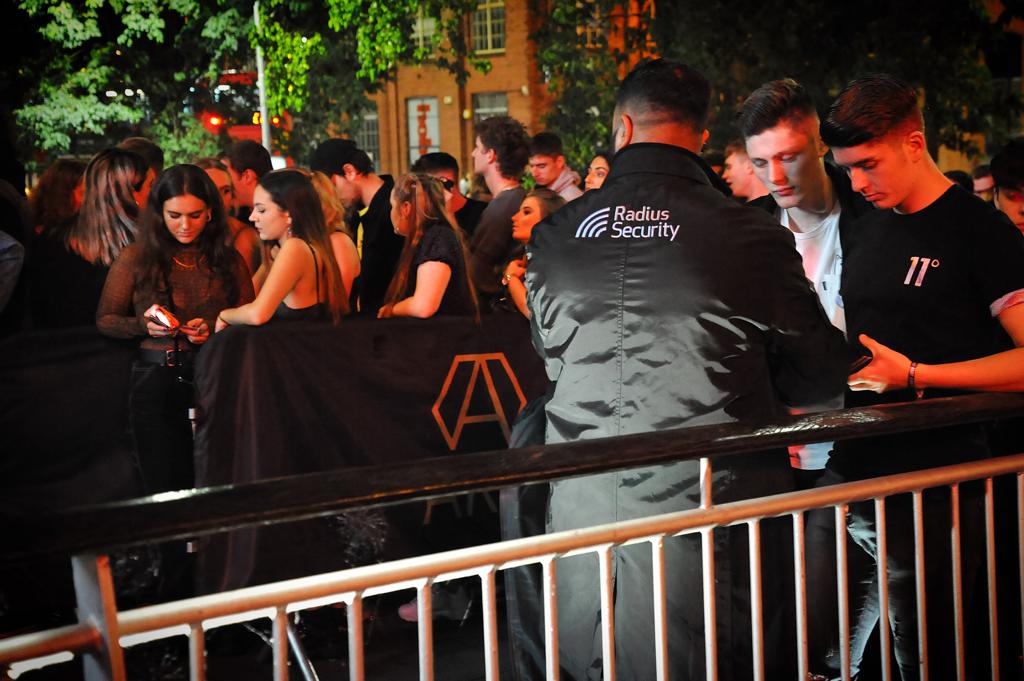
Door supervisors are SIA-licensed individuals whose primary role is controlling entry, conducting searches, and managing behaviour at the point of access. They are the appropriate choice for licensed premises — pubs, clubs, bars, event venues — where the primary risk is at the door and in the immediate venue environment.
Crowd safety management involves a broader team of roles — crowd safety stewards, safety officers, first aid coordinators, and command-and-control structures — designed to manage the safety of large numbers of people across an open or semi-open environment. It is appropriate for outdoor festivals, large concerts, sporting events, and any event where crowd dynamics are a primary safety concern.
Many Manchester events require both: door supervisors at entry and exit points, and a crowd safety management structure across the wider event footprint. We can advise on the right combination for your event.
What Questions to Ask Your Event Security Provider
Before signing with any security company for your Manchester event, make sure you ask:
- Are your officers SIA-licensed for the right activity? Door supervision and security guarding are different SIA licence categories. Crowd safety management involves additional qualifications. Confirm that your provider’s personnel hold the right licences for the roles they will be filling.
- Do you carry public liability insurance? This is non-negotiable. Any professional event security company carries appropriate public liability insurance. Ask to see the certificate before you commit.
- What are your communication protocols during the event? A well-run event security operation has clear radio communication, a defined command structure, and a process for escalating incidents to the event organiser and, if necessary, to the police.
- Are your door supervisors DBS-checked? For events on licensed premises, most licensing authorities expect door supervisors to hold a current Disclosure and Barring Service check in addition to their SIA licence.
- What experience do you have with similar events? Ask for examples of comparable events the company has covered. A provider experienced in Manchester’s event scene will understand the city’s venues, licensing environment, and what actually goes wrong on a busy summer night.
Radius Security’s Event Experience
Radius Security has provided event security and door supervision across Greater Manchester for over 20 years. Our client list includes Blackburn Rovers FC — where we manage match day security and stadium access — and Revolution Bars Wigan, a high-footfall late-night venue.
Our door supervisors are SIA-licensed, professionally presented, and trained in conflict management. We understand that the role of a door supervisor at a well-run event is not intimidation — it is professionalism, communication, and prevention.