
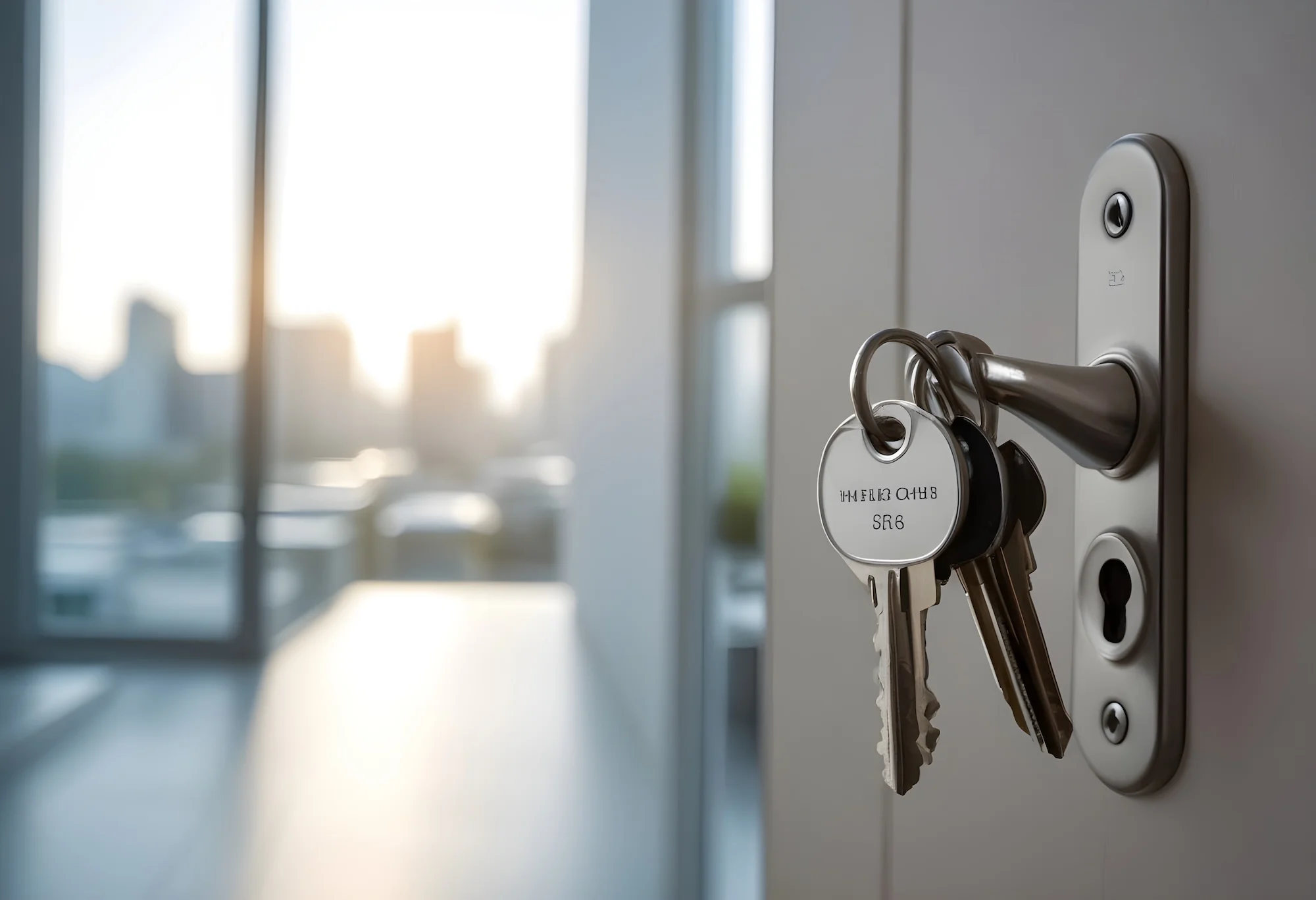
A key holding service is a security arrangement in which a professional, SIA-licensed security company holds a set of keys to your premises and responds on your behalf whenever your alarm is triggered or out-of-hours access is required.
For many business owners, this one change — removing themselves from the alarm callout list — is one of the most straightforward security improvements they ever make. This guide explains how key holding works, how it differs from alarm response, when your business should use it, and what to look for in a provider.
What Does a Key Holding Service Actually Do?
The process is straightforward:
- You provide Radius Security with a full set of keys and alarm codes for your premises
- Your alarm monitoring company is updated to call Radius Security rather than you when an alarm activates
- When an alarm triggers, a Radius officer responds to your site — typically within a defined response window
- The officer assesses the situation, checks all entry points, and determines whether there has been a breach
- If there is evidence of a break-in, the police are called and the site is secured
- You receive a full written incident report
That is it. No more 3am phone calls. No more driving to site in the dark to find a faulty sensor. Your business is covered, and you are not the one bearing the personal risk of a lone-worker response to an unknown situation.
Key Holding vs Alarm Response: What Is the Difference?
Many business owners use these terms interchangeably, but they refer to slightly different services:
- Key holding is the standing arrangement by which a security company holds your keys and is authorised to access your premises. It is a contractual agreement, typically billed on a monthly retainer basis.
- Alarm response is the specific act of attending your premises when an alarm activates. Alarm response is what happens when key holding is triggered. You can have alarm response without a formal key holding arrangement, but in practice the two are almost always provided together.
- Think of it this way: key holding is the arrangement; alarm response is the service that arrangement enables.
When Should a Business Use a Professional Key Holding Service?
Key holding is appropriate for virtually any business with a physical premises that is unoccupied out of hours. It is particularly valuable for:
- Warehouses and logistics facilities. High-value stock, heavy equipment, and 24/7 alarm activity make professional key holding essential. The financial risk of a delayed alarm response — or an owner attending alone — can be significant.
- Retail units. After-hours break-ins and smash-and-grab incidents are a real risk for retail businesses. A professional alarm response means a trained officer is on site quickly, limiting damage and ensuring the police have the information they need.
- Office buildings. Offices may not hold high-value stock, but they hold data, equipment, and sensitive information. A fast, professional response after an alarm activation protects more than just physical assets.
- Care facilities and residential schemes. Where vulnerable people are on site, out-of-hours access requirements can arise unexpectedly. Professional key holding ensures authorised access is always available quickly and safely.
Why You Should Not Be Your Own Keyholder
Many business owners put themselves on the alarm callout list because it feels like the responsible thing to do. In practice, it creates several problems:
- Personal safety risk. Attending a potentially active break-in alone is dangerous. Police guidance consistently advises against it.
- Response time. A professional response company will typically reach your site faster than you can — especially if you live any distance from your premises.
- Legal liability. If something goes wrong during a lone-worker alarm response, the consequences for an untrained individual can be serious.
- Disruption. False alarms are common — industry figures suggest around 94% of commercial alarm activations are false. Every false alarm that wakes you at 3am is a disruption to your health, your family, and your next working day.
What to Check Before Signing Up
SIA Licensing
Any officer responding to your alarm must hold a current SIA licence for the relevant activity. This is a legal requirement. Confirm this before signing any contract.
Response Time Commitment
Ask your provider what their target response time is and whether it is contractually guaranteed. Response time is the most critical variable in an alarm response service — make sure you know exactly what you are buying.
Insurance Coverage
A professional key holding company carries appropriate insurance for loss or damage arising from a response. Always confirm the provider’s insurance position before handing over your keys.
Reporting
After every alarm activation, you should receive a written report detailing the time of response, what was found, what action was taken, and any follow-up required. If a provider cannot commit to this, look elsewhere.
Coverage Across the North West
Radius Security provides key holding and alarm response services across the North West, including Greater Manchester, Wigan, Warrington, Liverpool, and Widnes. Our mobile patrol vehicles cover regular routes across these areas, meaning response times are fast and consistent — and our officers already know your local roads.